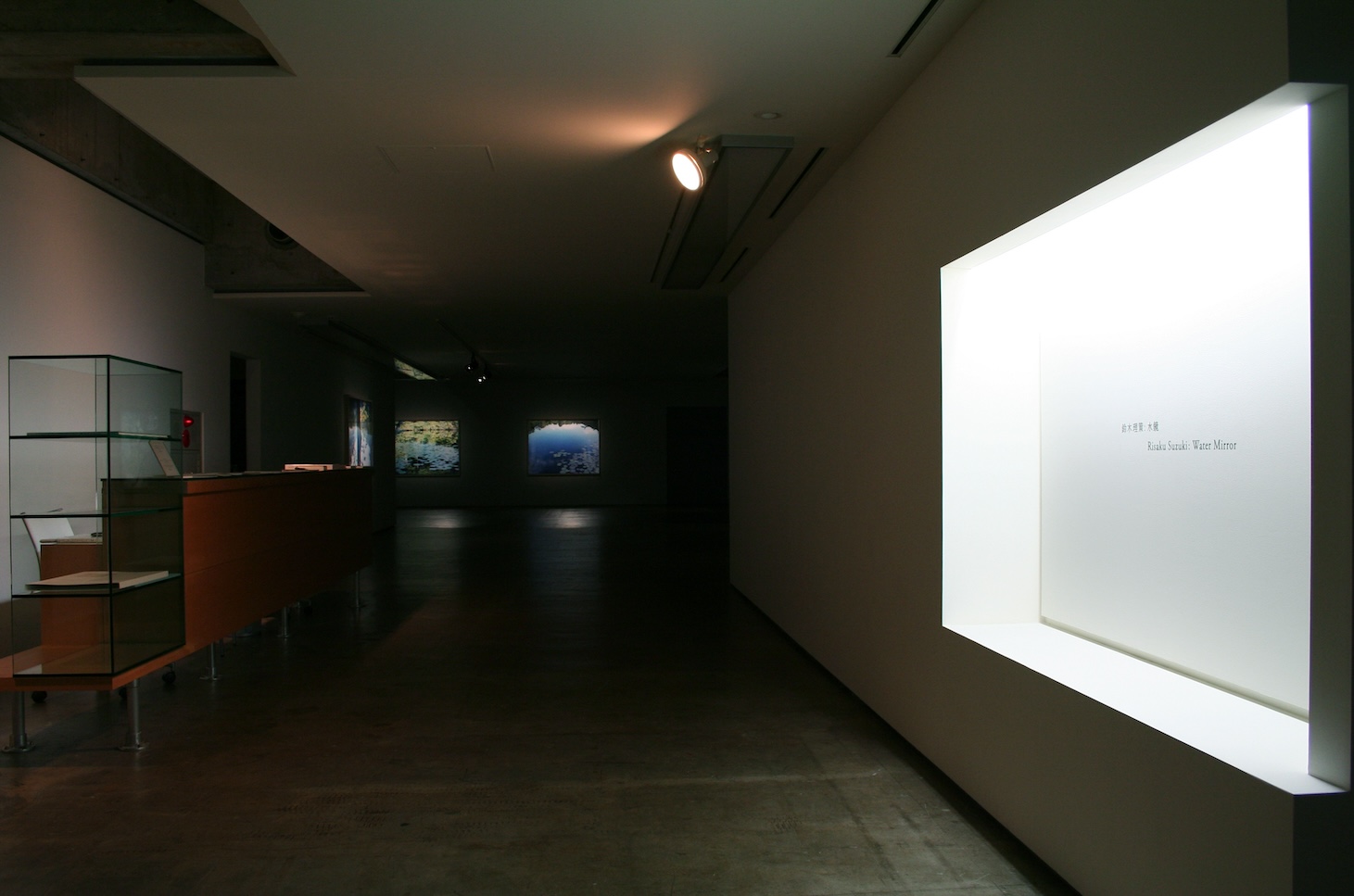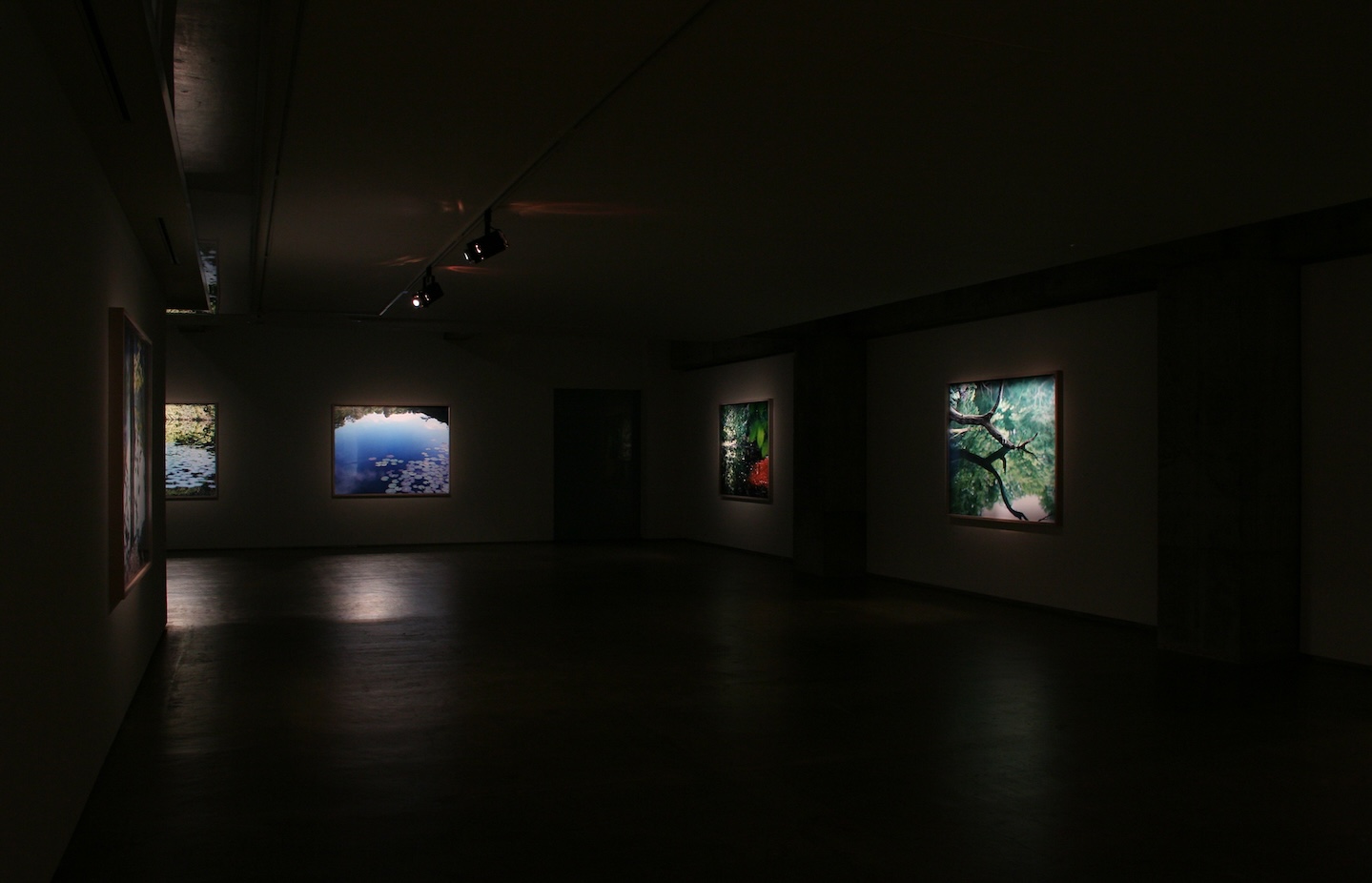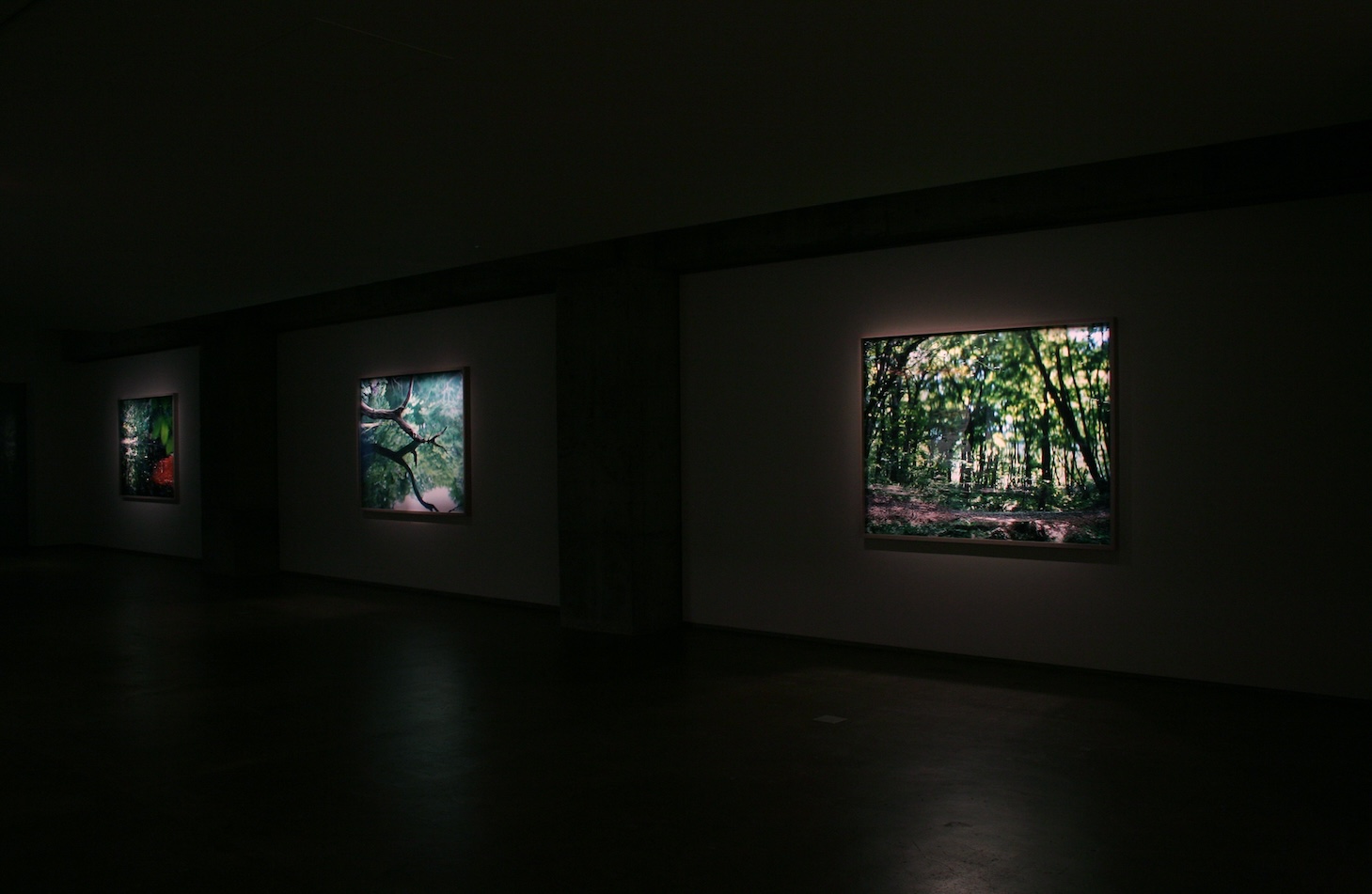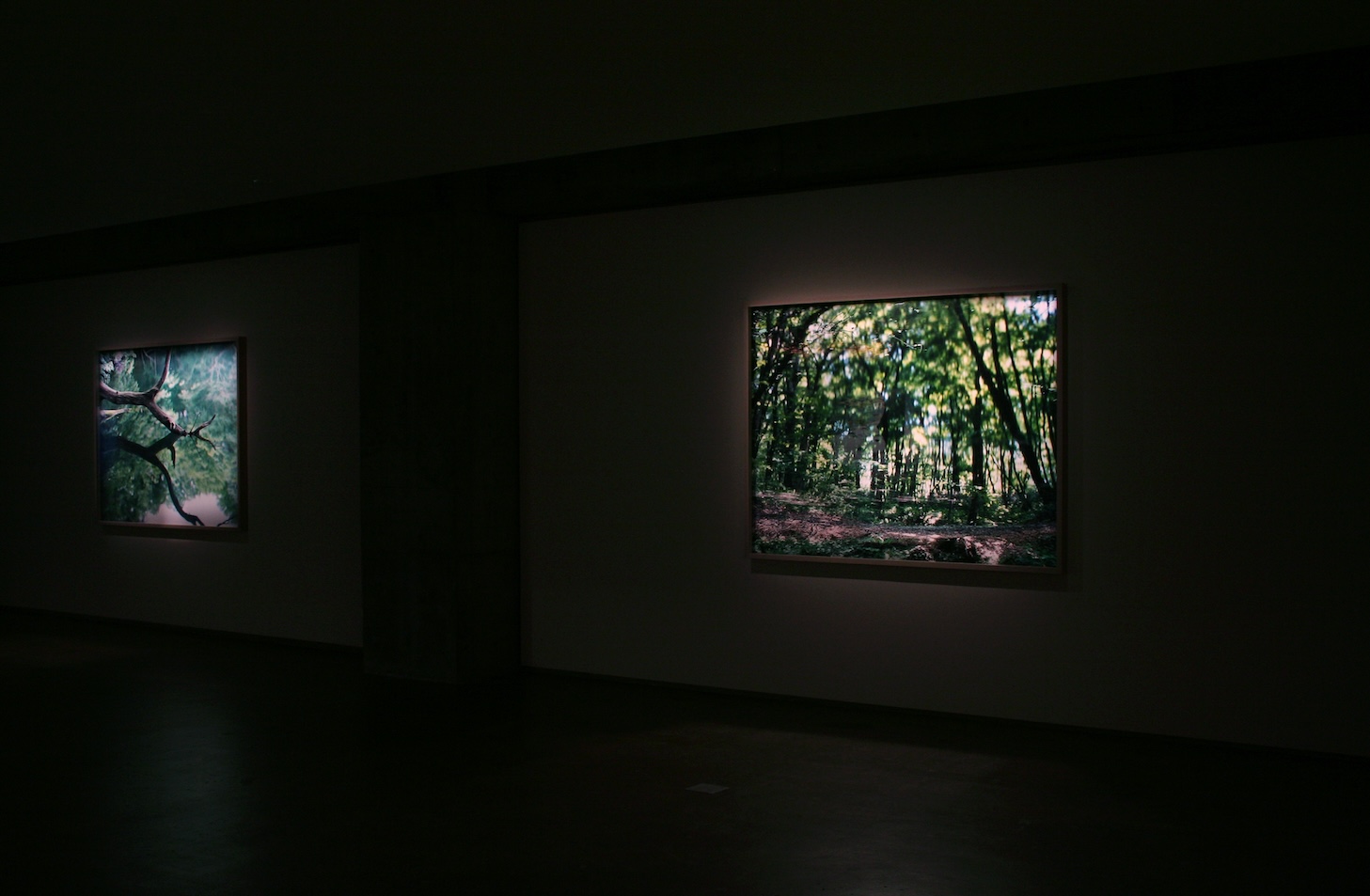
Risaku Suzuki: Water Mirror
Thursday, July 23 – Saturday, September 5, 2015
11:00–19:00
*Closed on Sundays, Mondays and Holidays
*Risaku Suzuki will join the reception.
Water Mirror
Risaku Suzuki
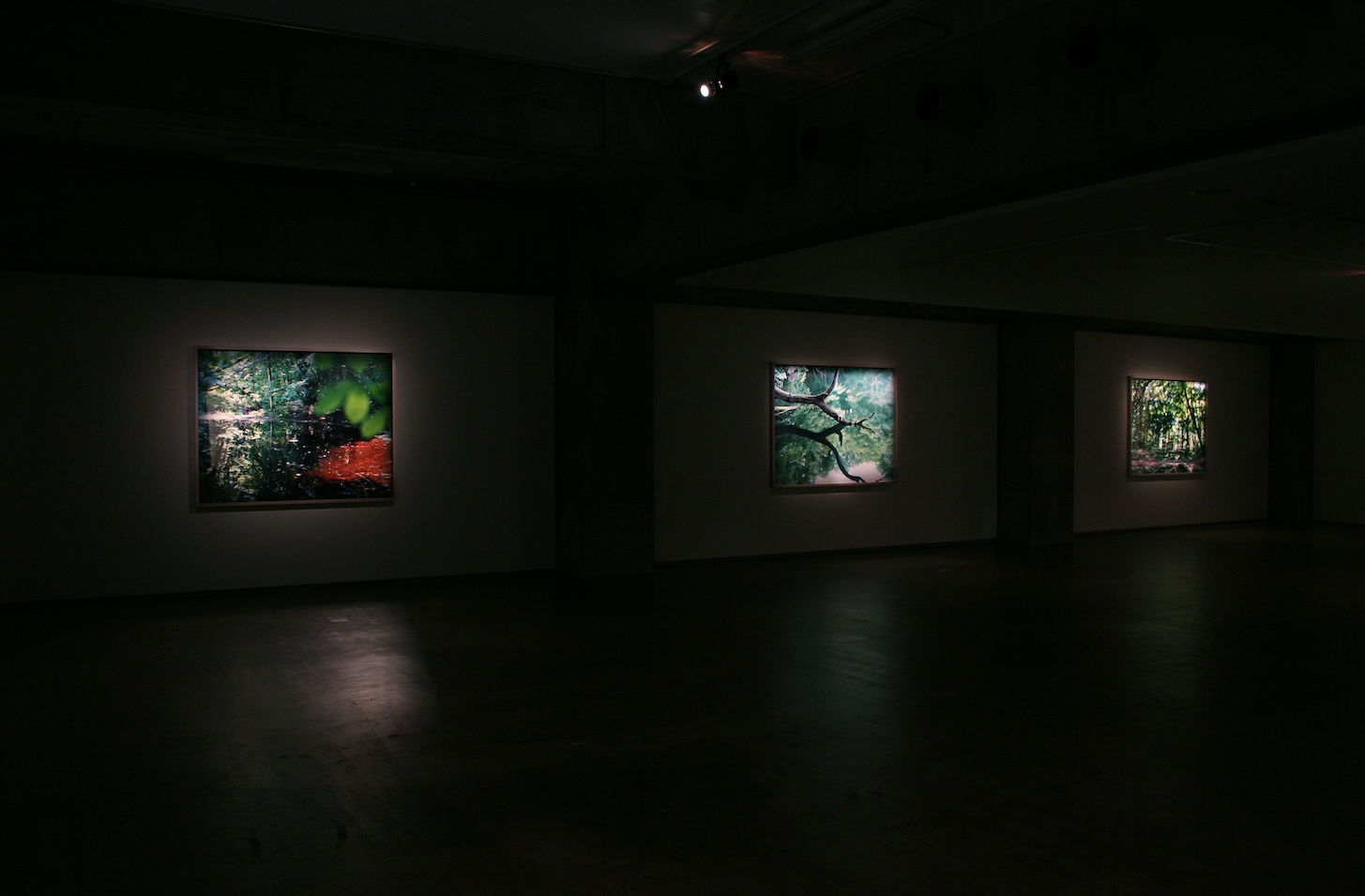
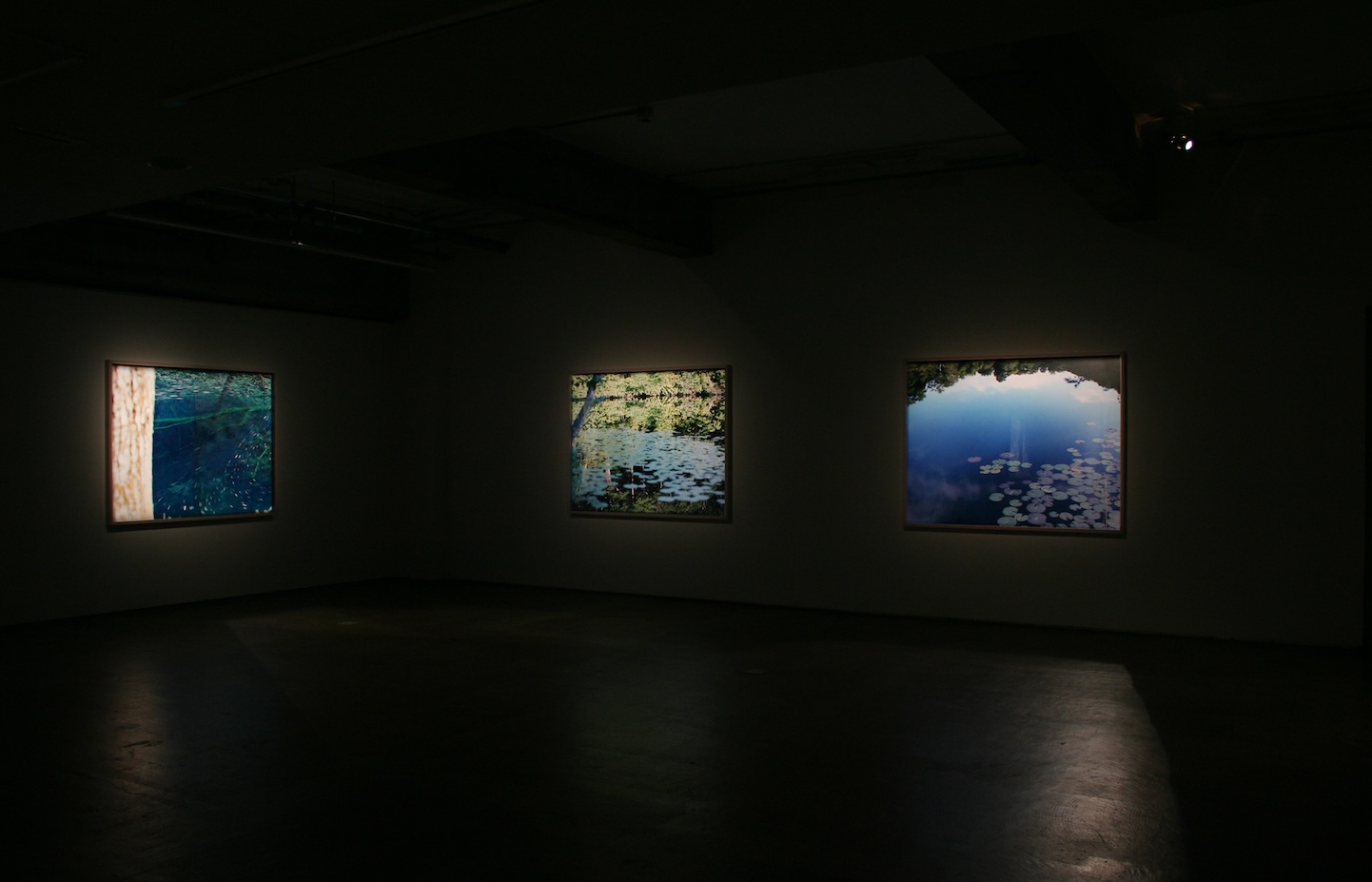
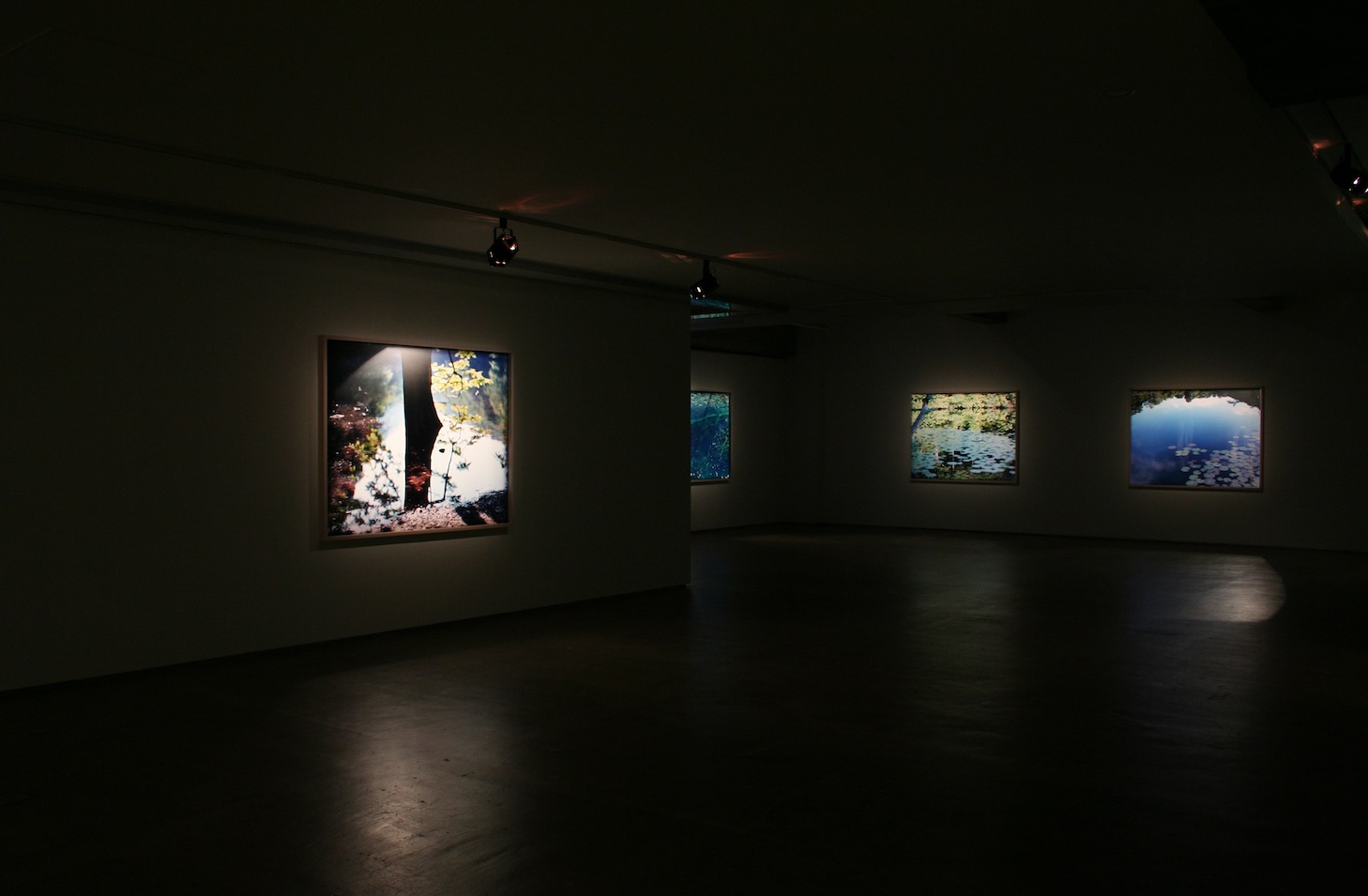
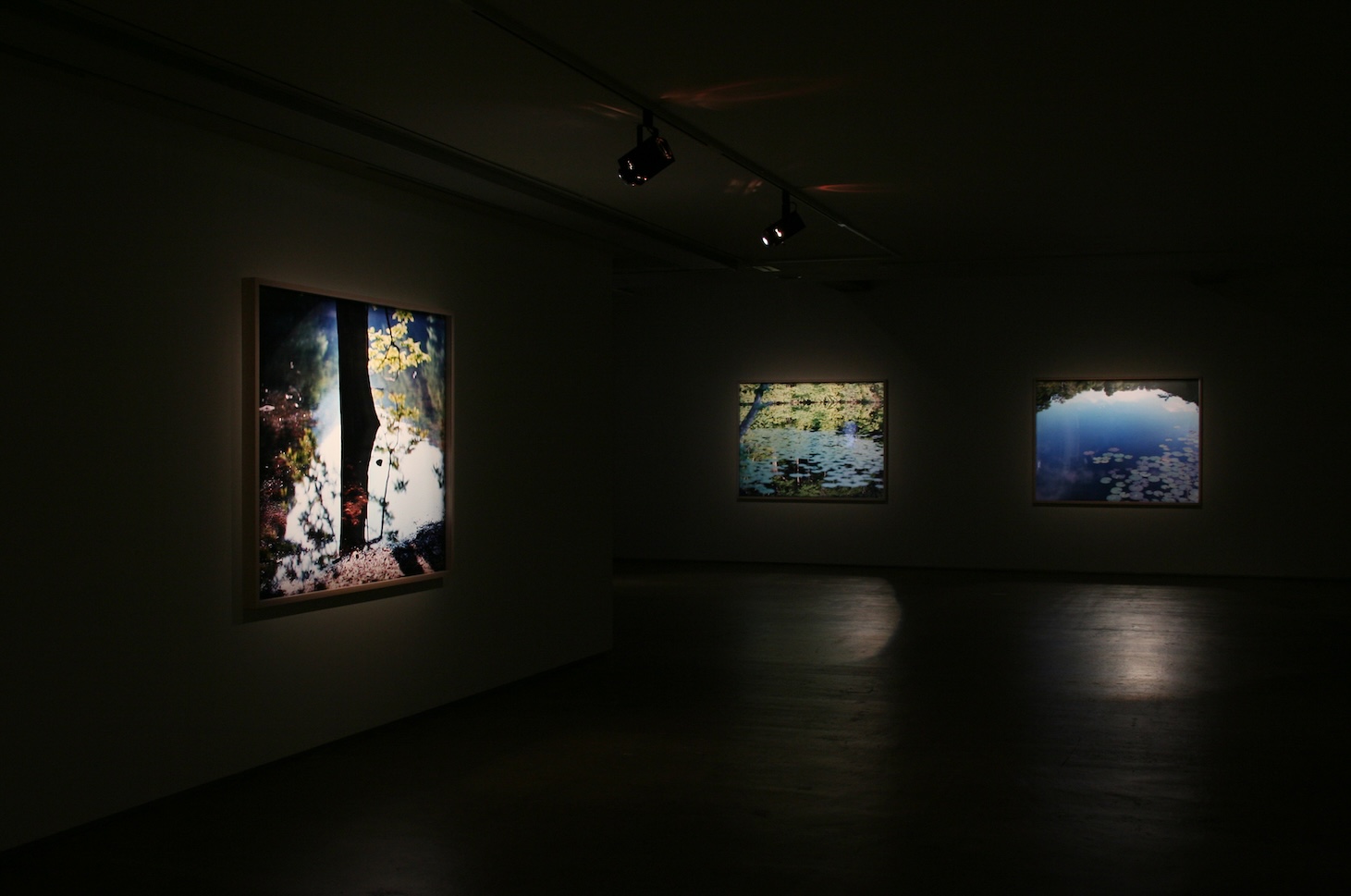
The human eye is unable to enlarge distant objects in order to capture them like the zoom lens of a camera, so faraway objects seem small, and objects close by large, this discrepancy in the volume of information leading us to perceive the contents of our field of vision as a single, self-contained vista. But water, which reflects light in complex ways, is an exception to this, and when we linger by the side of a lake, gazing at the surface of the water, the information we obtain varies greatly according to where we place our viewpoint.
Focusing our awareness on the surface forming the border between lakewater and air, we may notice tiny leaves and insects bobbing about on the surface of the water, which shimmers like the surface of a jelly, or see ripples caused by the breeze form myriad glittering white fragments of light. Staring harder into the depths of the blue-green surface we may observe tree branches lying suspended, neither floating nor sinking; the texture of moss trailing tendrils at the lake bottom; the flashing forms of passing fish. All of which went unnoticed when our attention was directed entirely at the water’s surface.
Let us shift our gaze once more and focus on the reflection in the water. Now we encounter a different “image” to the “water” we were looking at a moment ago. Trees surrounding the lake are just as lush and verdant in the reflected image, while clouds that ought to be far up in the sky float there tantalizingly, almost within arm’s reach. The sight of a space seemingly of extraordinary depth appearing in the flat surface of the water is one of mystery, and our gaze is lured, sucked even, deep into this world we can see. But as we peer harder at the water in an attempt to see deep into the space that has appeared as a reflection, the sight of a rock or other object in the water returns us abruptly from the realm of virtual images to that
of the real space. Water’s surface, in the water, reflection: the lakes and wetlands that present us with these different worlds make immensely attractive objects of visual expression. I suspect that in his water lily series Monet too was intrigued by this.
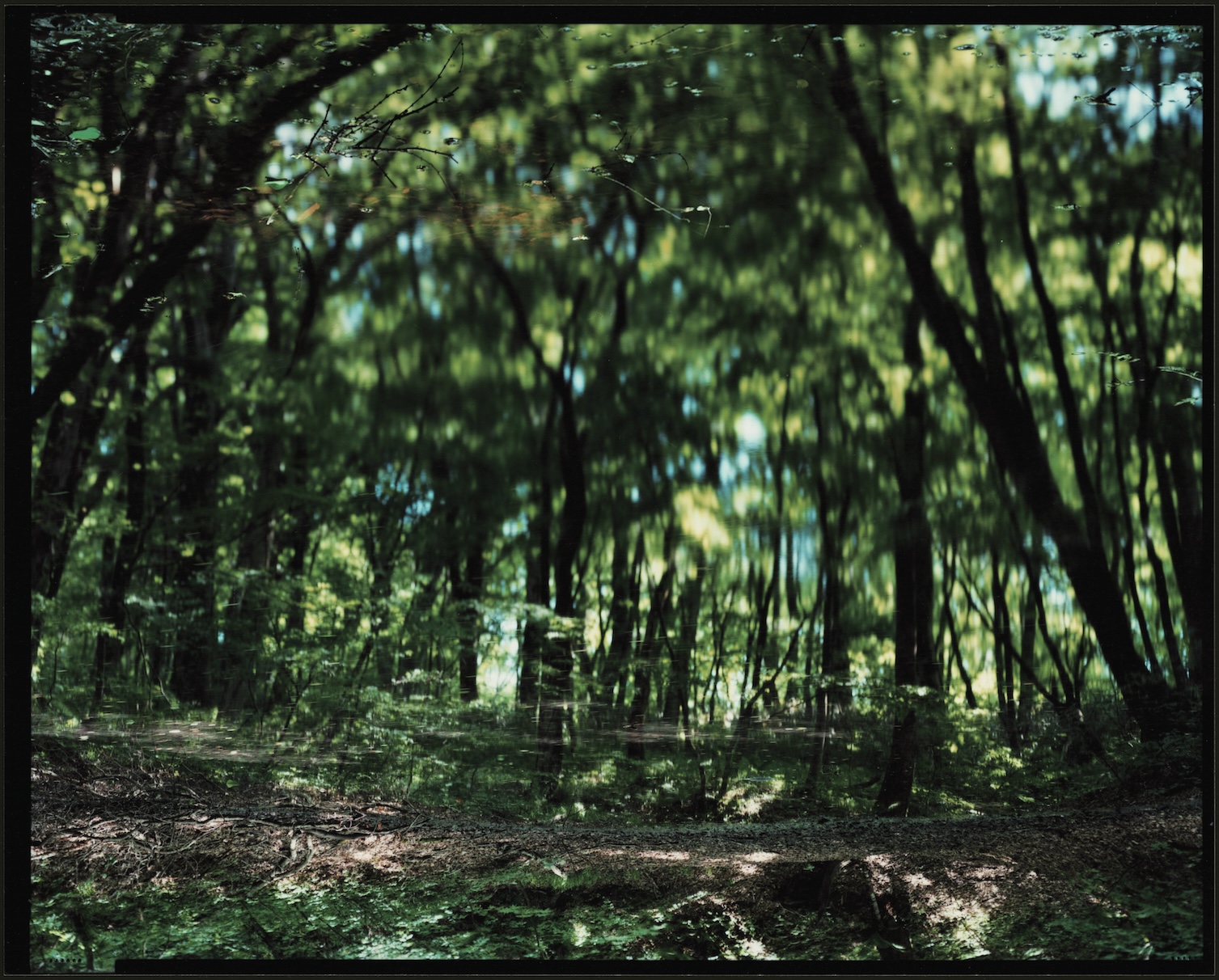
“Water Mirror” was shot using a large-format camera, concentrating on the characteristic of photographs by which the image changes according to the focal position. As a photographic technique it is exceedingly simple, the light bounced off the world being captured on film and printed without modification on photographic paper. No manipulation of images or digital processing was performed. When you actually stand by a body of water and look at the surface, it is possible to distinguish between trees surrounding the water and trees reflected in the water. One you can touch, the other you cannot. One has the potential to influence behavior, the other does not. Through the camera lens however it is hard to distinguish between trees with their roots planted in the ground and virtual trees suspended in the water’s surface, and it is interesting how in photos they appear equal.
A camera is a device for acquiring part of an object, and I see photography as pure perception, courtesy of the camera. Yet when we look at the resulting photo, how we perceive the object inevitably depends on our knowledge and experience. For example, an adult who has acquired the knowledge that “a mirror is a reflecting tool” will look at a mirror without suspicion, but a baby seeing a mirror for the first time may start to cry, mistaking their own reflection for someone they don’t know, or extend a hand in an attempt to touch the world in the mirror. Every one of us must have looked at a mirror in that way once, but as experience permeates us, the act of looking becomes more efficient. This being the case, what do photos of mirror reflections in water look like? I see the water’s surface as a fascinating motif for contemplating the impossibility of seeing without relying on experience.